Emma radiates unapologetic clarity—aware of her beauty, yet untouched by its sway.

>bar / Exaggeration teases truth—warmth persists.
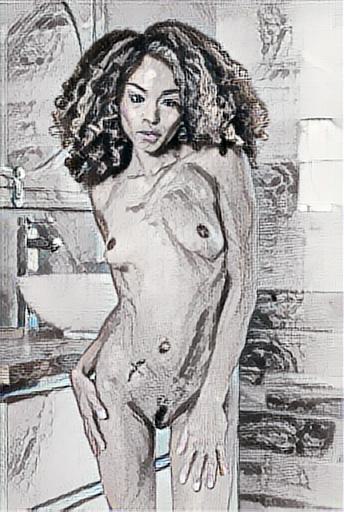
>bijou / Contours honed—truth pierces through grayscale, stripped of illusion.

>bliss / Dread stains the frame—pose poised, yet depth denied by gloss.

>DF / Vibrant spirit ignites—her vision pulses bold, empowered, unapologetically alive.

>fex / Ideal shattered—her portrayal defies comfort, unsettling cherished assumptions.

>lia / not currently for sale

>lisbon / Life rekindles—through ruin and residue, resilience rises unconquered.

>moody / Geometry sings—cool tones and sharp lines evoke latent strength.

>narg / Playful contours dance—identity distilled, surreal yet boldly assertive.

>oof / Chaos bends the mirror—clarity revealed through fractured form.

>pal / Essence unveiled—detail fades, yet suggestion floods the frame with meaning.

>vienna / Turbulence looms—yet resolve stands firm, braced and quietly defiant.
Domestic backgrounds in portraiture create a quietly powerful stage for intimacy, context, and emotional resonance. By placing the subject within familiar surroundings—rooms, furnishings, everyday textures—the viewer is offered a deeper window into identity. The space itself speaks, shaping interpretation and inviting psychological closeness.
Consider Johannes Vermeer’s interiors, where subjects—often women—are nestled within domestic stillness. In Woman Holding a Balance, the tranquil setting amplifies the contemplative mood and anchors her gestures in the rhythm of daily life. Similarly, Lucian Freud’s nudes in cramped, cluttered rooms strip away idealization. The domestic details—peeling walls, rumpled sheets—intensify vulnerability and humanity, contrasting starkly with classical notions of detached beauty.
In nude portraiture, domesticity adds a layer of complex realism. Unlike mythic or abstract settings, the lived-in room evokes warmth, imperfection, and emotional depth. It collapses distance, making the portrayal less about display and more about encounter. The private setting becomes a collaborator in the storytelling, emphasizing themes of comfort, constraint, sensuality, or solitude.
Ultimately, domestic backgrounds soften the gaze, blurring the line between viewer and subject. They insist that beauty is contextual, that identity is inseparable from space—and that the home, with all its quiet signals, is never merely passive, but deeply expressive.