Standing patiently amid the blossoms, anticipation shimmering in the air.

>berlin / Light untouched—aspiration lifts where innocence meets the infinite.

>jamie / Sun slants low—time thins beneath twilight’s urgency.
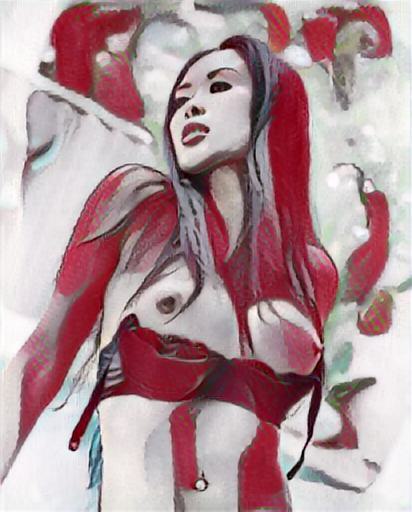
>lagos / Fire leaps forward.

>mumbai / Breath syncs with soil—existence woven into earth’s quiet rhythm.

>osaka / Hope dims—clock strikes doubt, shadows pool in restless mind.

>riley / Vision narrows—universe dissolves into the gravity of her presence.

>rome / Exposed—emotion flickers at the brink of control.

>vesper / Clock storms ahead—her grace lingers behind shifting inevitability.
Perspective in portraiture is a silent narrator—it shapes narrative, emotional resonance, and psychological tension. A straight-on view speaks of confrontation or invitation: the subject meets our gaze, asserting equality or challenging the viewer. Side profiles suggest reflection or mystery; think of Vermeer’s women lost in quiet interiority. An aerial perspective can diminish or abstract—Picasso’s nudes often adopt bird’s-eye fragmentation, emphasizing disassociation or objecthood. From below, however, the dynamic reverses. We look up with reverence or awe; the subject looms, mythic or divine. Rodin’s The Thinker gains power precisely from this vantage—his intellectual gravity magnified by our physical inferiority.
Abstract impressionism transforms these conventions by dissolving clarity into gesture. Position still matters, but it’s emotive rather than literal. A subject seen from below may not tower in anatomical proportion—but the brushwork, scale, and color intensity suggest dominance. A semi-nude subject heightens the interplay. Without clothing to signal class or context, the body—its stance, its angle—speaks of primal essence. Abstract forms amplify vulnerability or defiance; what is exposed is also empowered.
These images compel us because they invite projection. Perspective guides not just what we see, but how we feel. Through positional nuance and abstraction, portraiture becomes psychological theater—where the subject reigns, retreats, or reaches toward us through painted space.