Familiar morning motions stir a quiet reckoning—self observed, not capricious.

>act / Essence erased—interpretation blooms, shaped by absence and quiet yearning.
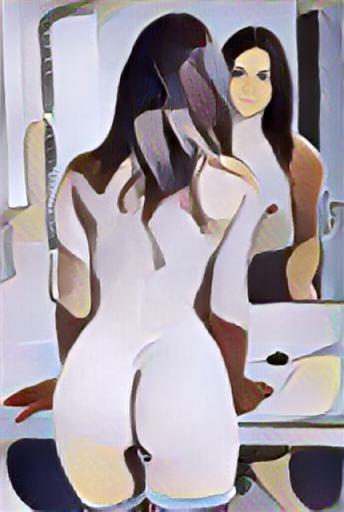
>alas / Resolve gathers—composure forged, a mask rising to meet the day.

>aspen / Whimsy leaps—exaggerated charm hooks the eye.
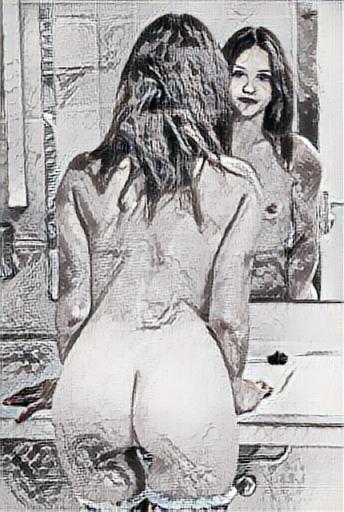
>bijou / Halftone grit clings—truth pressed into stark, unapologetic detail.
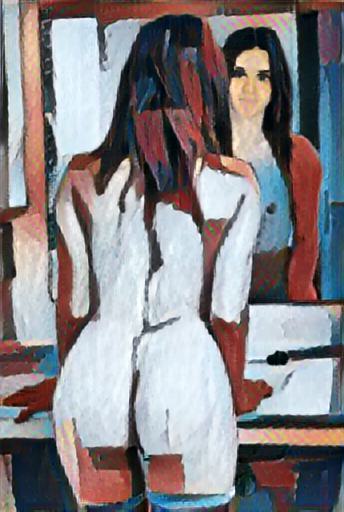
>luansa / Softness skewed—harsh lines clash with tenderness, evoking dissonant emotion.
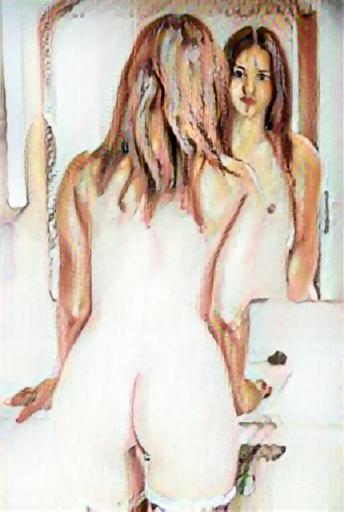
>pill / Memory flickers—yesterday’s echo drifts through time’s faded corridors.
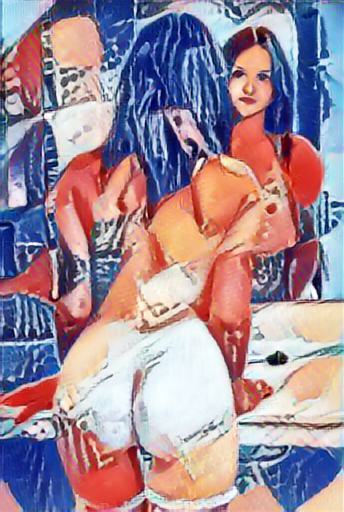
>puno / Joy stirs—weekend summons laughter, lightness dancing just out of frame.
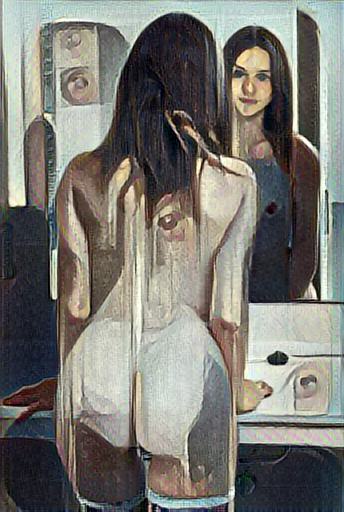
>quito / Grace dims as shadow slips across quiet joy.

>RMN / Subtle edge gleams—grace tinged with quiet pride and appraisal.

>RNR / Her gaze cuts through the abstraction, unwavering and hauntingly clear.
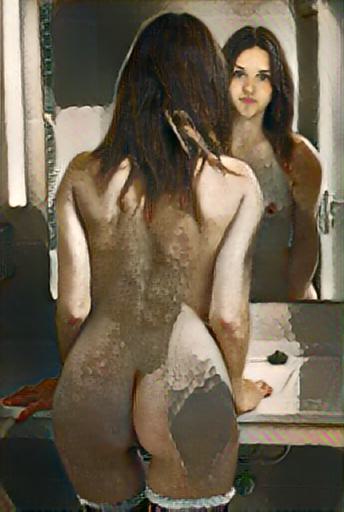
>sutton / Twilight settles—day’s weight lifts as restoration gently takes its place.
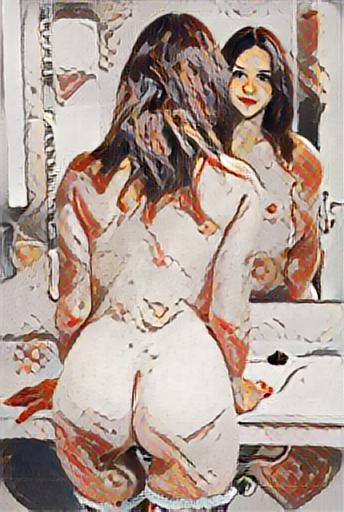
>was / Her Mona Lisa smile charts morning’s course with subtle certainty.
Mirrors in portraiture function as quiet provocateurs—tools that fracture and reveal, distill and complicate. When a subject gazes at her own reflection, she enters dialogue not just with the mirror, but with the viewer, and with herself. The image doubles, not merely in sight but in meaning: we see the person as seen and the person as seeing. This duality collapses boundaries, allowing intimacy to slip through the glass.
Art history is full of mirrors used to explore identity and perception. Diego Velázquez’s Las Meninas slyly places the royal couple in reflection, flipping the gaze onto viewer and artist. Manet’s Bar at the Folies-Bergère obscures reality with a distorted mirror, hinting at loneliness behind performance. In more intimate nudes, like those by Balthus or Egon Schiele, the mirror becomes a tool of self-assertion or exposure—balancing empowerment and voyeurism.
When the subject confronts her image, vanity enters—but not always in its pejorative sense. Vanity, here, becomes reflection, reclamation, curiosity. She studies herself not to flaunt, but to understand. And for the viewer, the mirrored view offers layered truths: surface beauty, inner dialogue, performative tension. The mirror doesn’t just reflect—it refracts the complexities of being seen, of seeing oneself.