A woman in a cozy sweater, her mouth gently concealed as her eyes fixate in an expressive gaze.
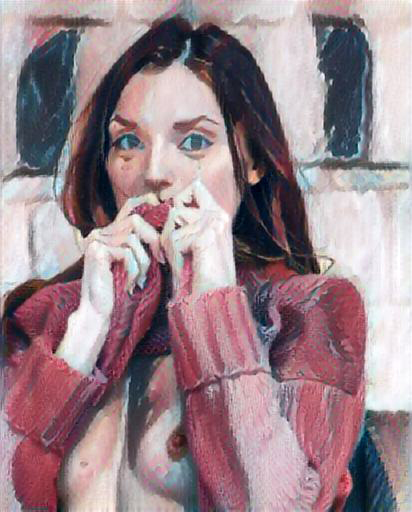
>avery / Petals veil fire—softness tinted with quiet, unspoken defiance.
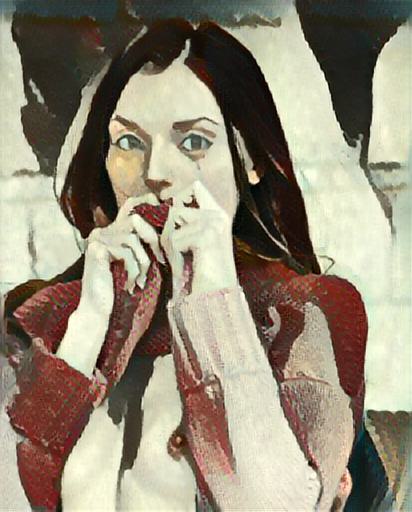
>briar / Chains slip in silence—liberation trails a hesitant descent.
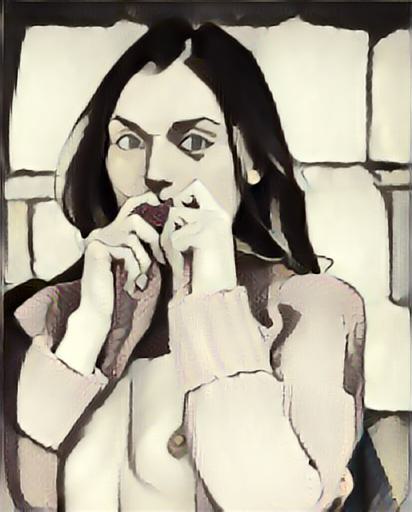
>ene / not currently for sale
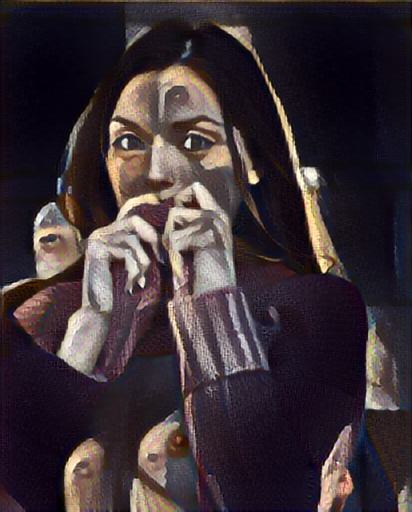
>oslo / Shadow shelters truth—quiet refuge from the glare of judgment.
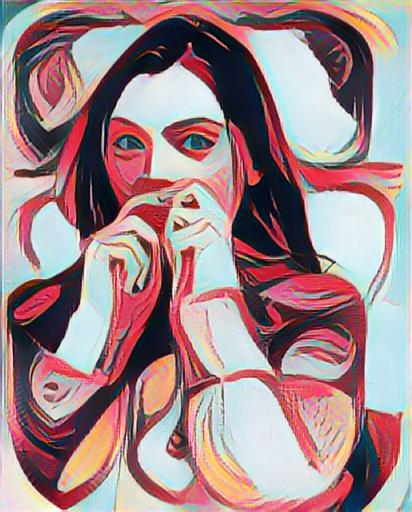
>paz / Flame flickers in poise

>RNR / Promise chisels through silence—fresh bloom tempered by ancient weight.
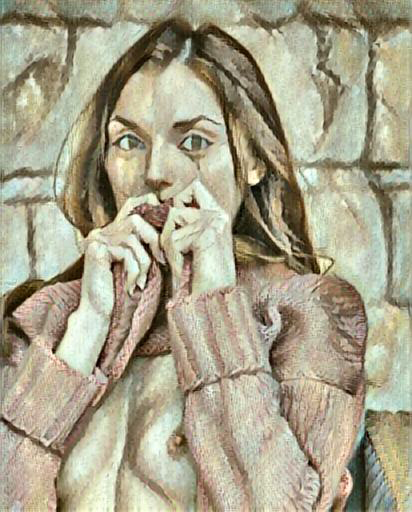
>tex / Existence flowing in unforced rhythm.
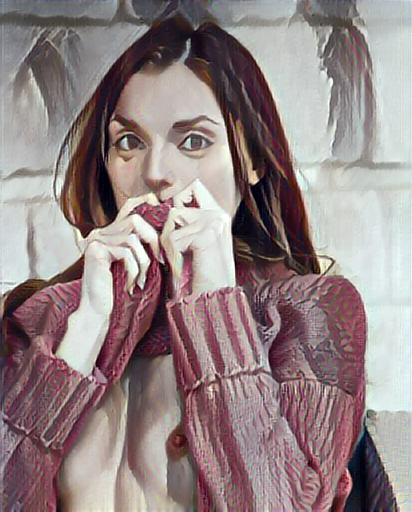
>bres / Tomorrow whispers through cracks—curiosity blooming beyond the now.
Abstract impressionist portraits of semi-nude “girl-next-door” figures evoke a unique cocktail of innocence, vulnerability, and defiance. The subject’s hesitant exposure, paired with an unwavering outward gaze, ignites complex readings. One moment, she’s the shy achiever stepping tentatively beyond prescribed boundaries; the next, she’s confronting us—asserting depth beneath a gentle exterior. This duality destabilizes perception. What feels intimate may also be untouchable. What appears soft may mask steel.
While few canonical examples embody this exact aesthetic, echoes exist in the psychologically charged figures of artists like Balthus or Schiele, where nudity coexists with emotional ambiguity. More abstract interpretations appear in postmodern feminist-inspired works, such as Tracey Emin’s self-referential pieces, or contemporary paintings by Chantal Joffe, where brushwork destabilizes identity and invites layered projection.
These portraits compel us because they invite both recognition and mystery. The familiar “girl-next-door” trope, softened and humanized, becomes a site of psychological tension when rendered in expressive abstraction. We are asked not just to see her, but to guess at her motives, her experience, her interior life. The aesthetic provokes empathy and unease, precisely by offering us what we think we know—and revealing that we do not. That interplay between exposure and withholding is what makes such images linger.